Smart Tupperware Storage Ideas to Declutter Your Kitchen
Smart Tupperware storage ideas to declutter your kitchen can be just as beautiful as they are practical—especially when you build a simple system around daily habits. The best setups don’t rely on perfection; they rely on clear zones, easy-to-grab stacks, and storage that matches your space. In this collection, you’ll find modern layouts that use drawers, pull-outs, wall storage, open shelving, and pantry zones—each styled to feel intentional, not cluttered.
Whether your kitchen leans bold and colorful or calm and minimal, these solutions make it easier to find lids, stack containers, and reset quickly after cooking. Expect smart labeling approaches, vertical dividers, tray-based categories, and container “homes” that keep countertops clean while still looking styled.
Deep Drawer Grid System With Color-Sorted Container Stacks
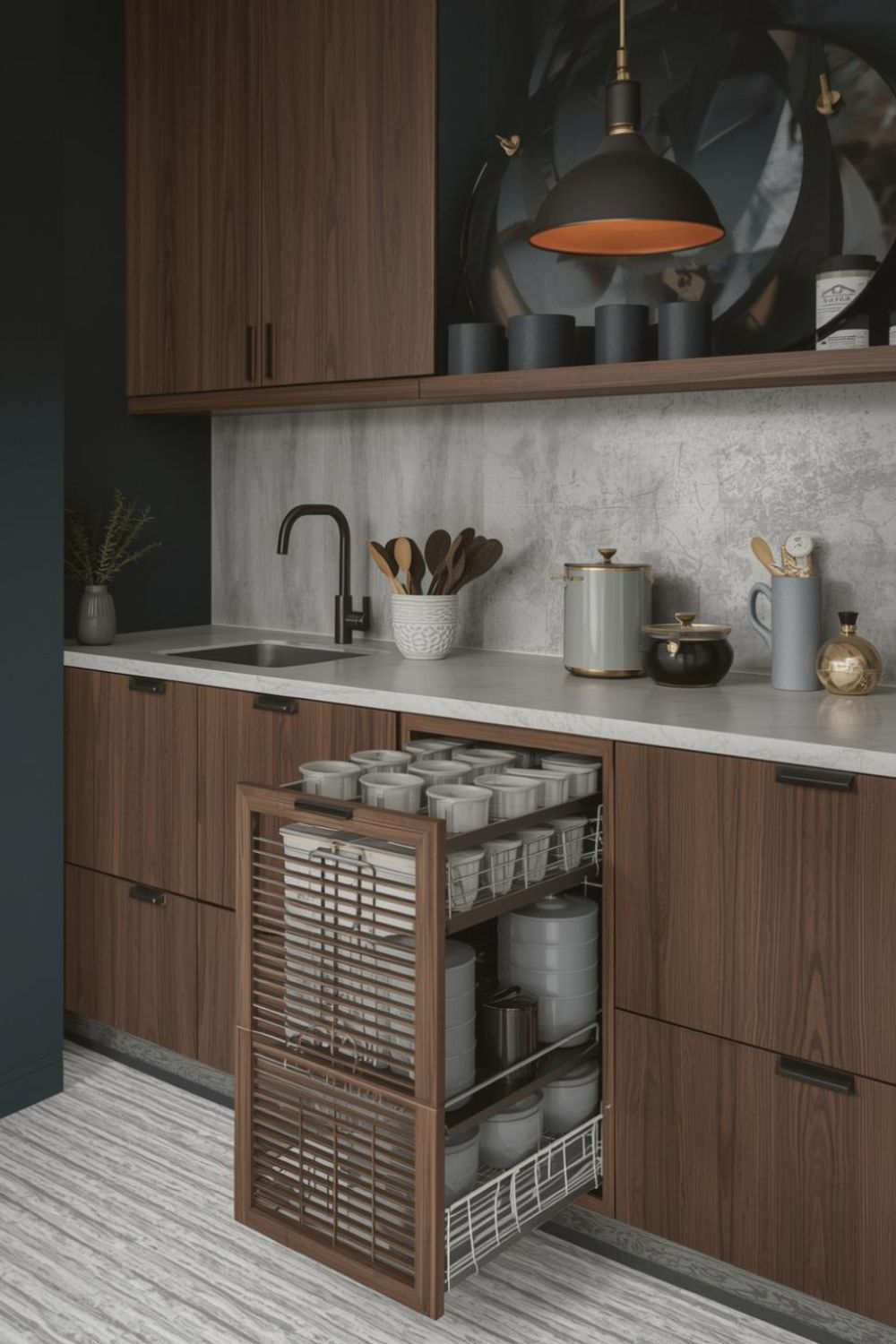
This scene pairs moody teal walls with walnut cabinetry for a rich, modern contrast. The open drawer becomes the star, using a structured grid insert to create clean lines and visual calm. Matte finishes reduce glare under the warm hanging lights, while the concrete-texture wall and white carpet keep the palette balanced and elevated.
Ideal for busy cooks who want fast grab-and-go storage. Each container size has a dedicated compartment, so lids stop wandering. The drawer system streamlines packing lunches, prepping ingredients, and resetting the kitchen in minutes.
Vertical Lid File Dividers Inside a Slim Base Cabinet

Charcoal cabinetry and brushed steel hardware read sleek and architectural against a softly textured plaster wall. The upright lid storage adds rhythm and structure, making the interior look intentionally designed rather than stuffed. Warm rust accents and smoky glass décor keep the dark dining room feeling layered, not heavy, especially with the bright white carpet below.
Perfect for small kitchens where lids pile up. Vertical dividers prevent warping, reduce searching, and make it easy to slide out the exact lid you need. Great for families who store containers daily and want less noise and clutter.
Pull-Out Pantry Tray Zone for Containers and Matching Lids

Midnight blue cabinetry with brass pulls feels bold yet polished, while the oak pantry interior adds warmth when the trays glide out. The brick-texture wall introduces a grounded, tactile backdrop that complements the dark dining room lighting. With the white carpet softening the scene, the pull-out trays look curated like a functional display instead of storage.
Made for households that meal-prep and store leftovers often. Pull-out trays bring everything into view, so you don’t dig through stacks. It also supports a clean workflow: containers below, lids above, and quick resets after dinner.
Under-Sink Slide-Out Caddies for Containers You Use Weekly

Forest green cabinetry feels confident and modern, especially against a wood-slat feature wall that adds warmth and depth. Patterned slate flooring near the cabinet contrasts nicely with the white carpet in the dining zone. The slide-out caddies keep the setup sleek and hidden, while stoneware and woven accents soften the darker palette.
Great for apartments where every cabinet matters. Slide-outs prevent bending and rummaging, so weekly containers stay accessible. It’s also practical for kids’ snacks or lunchboxes everything pulls forward, then tucks away cleanly.
Lazy Susan Turntable for Small Containers in a Corner Cabinet

Indigo cabinetry feels sophisticated against terrazzo flooring, while the pale oak cabinet interior brightens the corner when the door opens. The turntable introduces a circular form that softens the otherwise linear modern layout. Dark glass décor and a marbled tray echo the room’s moody tones, balanced by the clean white carpet.
Perfect for anyone who loses items in deep corners. The turntable brings containers forward with one spin, which helps during busy mornings or quick snack prep. It’s especially useful for smaller containers that otherwise get buried.
Drawer-in-Drawer Insert for Lids, Seals, and Mini Containers

Graphite cabinetry with soft gold hardware looks refined and modern, especially when paired with cherry-toned wood lining inside the drawers. The drawer-in-drawer detail feels custom, adding visual precision beneath warm lighting. A hint of geometric wall texture keeps the dark dining room from feeling flat, while white carpet adds brightness and softness.
Best for detail-oriented organizers who want every part contained. The shallow inner drawer keeps seals flat and easy to sort, so you stop buying replacements. It’s a smooth daily system for leftovers, lunches, and batch cooking.
Wall Rail With Hanging Baskets for Grab-and-Go Containers

Dark olive walls create a grounded backdrop for a black rail and wire baskets, giving the setup an industrial-modern edge. Walnut furniture adds warmth, while a raw concrete section keeps the room feeling urban and current. Under the hanging lights, the baskets look intentionally styled, especially with a clay vase and crisp framed print nearby.
Great for small homes that need cabinet space for cookware. Hanging baskets make frequently used containers quick to reach, especially for kids’ snacks. The vertical storage also improves airflow so everything dries faster after washing.
Glass-Front Sideboard Display for Prettiest Containers and Bowls

Espresso wood and brass framing give the glass-front sideboard a refined, furniture-like presence. Plum walls deepen the dining room mood, while suede-textured panels add softness and a quieter visual feel. With herringbone flooring and a white carpet under the table, the display looks curated functional storage that still reads like décor.
Perfect for entertainers who want storage outside the kitchen. The glass doors make it easy to spot what you need, while the closed drawer hides lids. It’s a practical way to keep serving-ready containers within reach.
Island End-Cap Shelves With Bins for Lunch and Snack Containers

A dark slate island feels contemporary and grounded, while light oak cubbies brighten the end-cap and add contrast. Limewash walls bring soft movement to the background, and a mustard art accent energizes the moody palette. With charcoal tile underfoot and white carpet nearby, the bins look tidy, tactile, and family friendly.
Great for households packing lunches daily. End-cap storage keeps containers close to the prep area, reducing back-and-forth. Fabric bins make it easy for kids to help everything has a simple drop zone that stays neat.
Narrow Rolling Cart Between Appliances for Containers and Lids

Emerald walls and warm oak cabinetry create a saturated, inviting mood, while the black-framed rolling cart adds a clean, modern outline. Dark wood shelves echo the room’s depth, and a textured stone wall panel adds a bold tactile layer. The white carpet keeps the dining area bright, balancing the darker concrete floor nearby.
Perfect for renters or anyone avoiding renovations. The cart turns an awkward gap into real storage and rolls out when you’re packing food. It’s also easy to reorganize seasonally if your container needs change.
Inside-Drawer Peg System to Prevent Container Piles From Sliding

Deep charcoal cabinets look sleek against sapphire wall accents, with brushed brass adding a refined highlight under warm dining lights. The peg system introduces a tailored, custom feel like the drawer was designed around your exact storage needs. Matte limestone flooring keeps it modern and muted, while woven wall texture adds softness without clutter.
Great for households that open drawers constantly. Pegs stop containers from sliding, tipping, or getting wedged. It’s especially helpful for lightweight pieces that move around, making daily cooking and cleanup smoother and less frustrating.
Conclusion
Smart Tupperware storage ideas to declutter your kitchen don’t have to look purely utilitarian these setups prove they can feel polished, modern, and lived-in. From drawer grids and peg systems to pantry pull-outs, door racks, and dining-room credenzas, there’s a solution here for every layout and storage style. Save your favorites, then build one small zone at a time. Once containers and lids have a consistent home, the rest of the kitchen gets easier to maintain every day.